§ 00 · about, how it started

It started witha few friendsand some talking.

Here's how a few friends at USAR started a club, got FOSS United behind it, and ended up with a community that builds things, argues a lot and throws a decent party. Follow the thread to read it.

scroll, the pencil draws as you go
  1. 012025

    It started with a chat

    In 2025, Siddharth and a few friends got talking about how there wasn't really a place on campus where open source was the main thing. Plenty of people at USAR could code, but most of it stayed on their own laptops.

    So they decided to just start a club for it. Nothing fancy. Give people a place to try this stuff together and see who sticks around.

    • a few friends
    • one simple idea
    • no one's permission
  2. 02the backers

    FOSS United came on board

    Pretty early on we got FOSS United involved. They're a non-profit that supports open source communities across India, and they back the club today.

    That changed things for us. We were no longer just a few friends with a group chat, we were part of something bigger. Our chapter page there is also where we put up Git Gud.

    Our FOSS United chapter
  3. 03the crew

    Then we found everyone else

    Next we started pulling in people from different sections and with different interests. Not everyone was a hardcore programmer, and honestly that was the best part.

    We also had one first-year in the group right from the start. Having someone that new around early on kept us from turning into a clique, and it meant we had to explain things properly.

    • different sections
    • different interests
    • a first-year from day one
  4. 04the mission

    Spreading the word

    We want more people to know what open source is, both inside our college and outside it. On campus that means workshops, talks and sprints where you make your first pull request with people sitting next to you.

    Beyond campus, we try to be part of the wider community, invite speakers anyone can listen to, and be useful to whoever asks where to begin.

    • workshops and sprints
    • open talks for everyone
    • showing up beyond campus
  5. 05inclusivity

    Everyone is welcome

    Open source can look pretty intimidating from the outside. We'd like to change that. Designers, writers, hardware people, organisers and complete beginners all do real work in open source, and we want them all in the room.

    If something helps the project or the people around it, it counts as a contribution. That's the rule.

    See where you'd fit
  6. 06the freedom

    Nobody is the boss of us

    No company owns this club. No sponsor, no one deciding what we're allowed to work on. We do what we want.

    Mostly that means building projects (this website is one), arguing about licences and tabs versus spaces, going on trips and throwing parties. It turns out people stay for the friends as much as for the code.

    • building projects
    • long arguments
    • trips
    • parties

and then came year one.

§ 01 · our philosophy

Open source,for everyone.

We don't have a long manifesto. There are four things we care about, and everything else we do comes from them.

  1. 1

    Everyone's invited

    Developers, designers, hardware tinkerers, writers, organisers, total beginners. Open source gets better with every kind of person in it, so we go out of our way to make room. If you want to be here, you're in.

  2. 2

    No proprietary master

    No company, sponsor or single person owns what we do. We choose our own projects, make our own rules and share what we make, because that's the whole idea of open source.

  3. 3

    No hierarchy

    Somebody has to run the group chat and book the rooms, but titles don't decide whose idea wins. A first-year's pull request gets the same review as anyone else's.

  4. 4

    Spread the word

    Most students have never heard of open source, or assume it isn't for them. We want to change that on campus and beyond, through workshops, talks, events and a lot of conversations. The more people who know, the better it gets for all of us.

this is the whole manifesto
disagree with any of it? open an issue. we mean it.

§ 02 · year one

Our first year was

We had a really good time, honestly. A club should be fun first. The learning kind of happens while you're busy enjoying it.

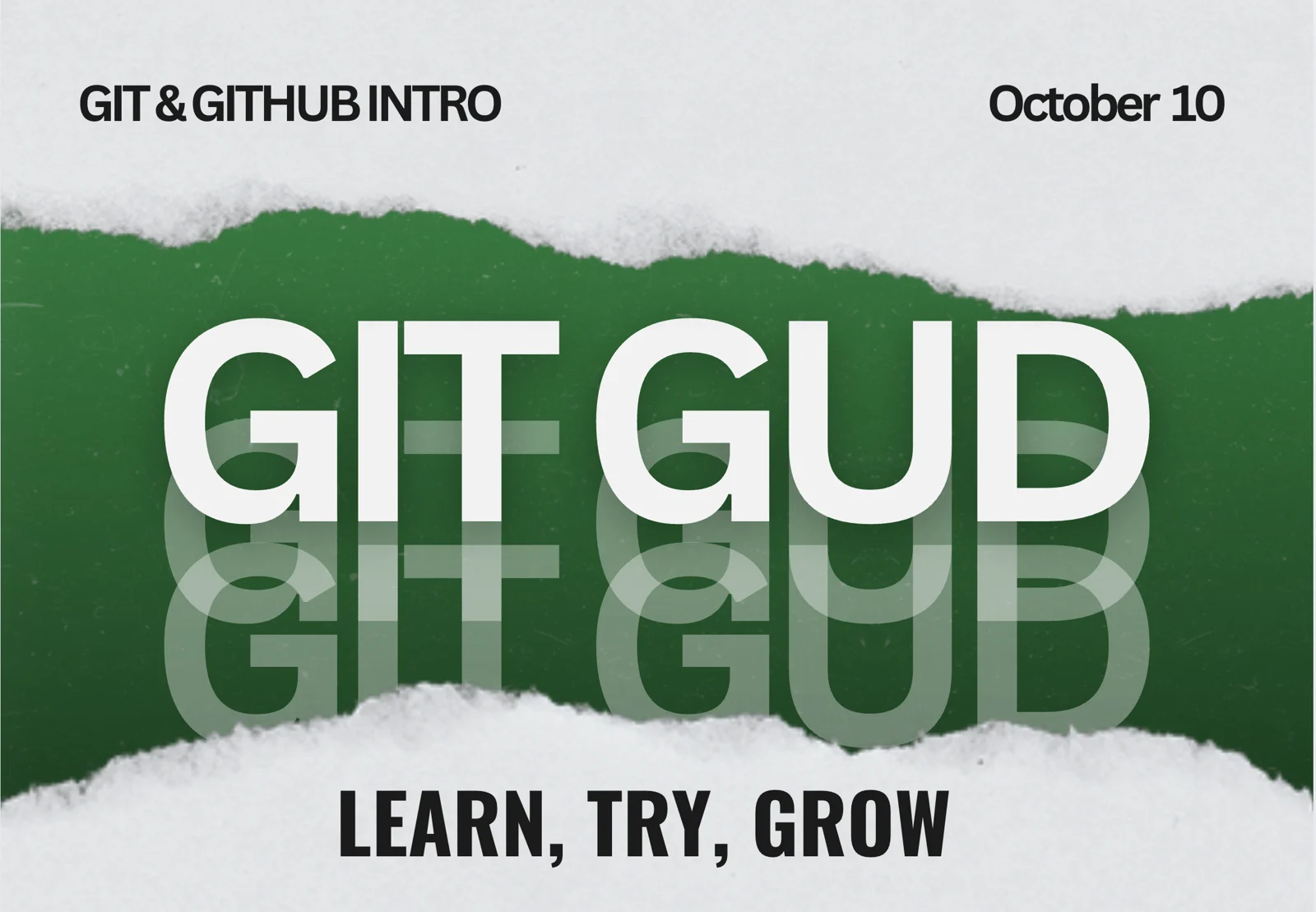
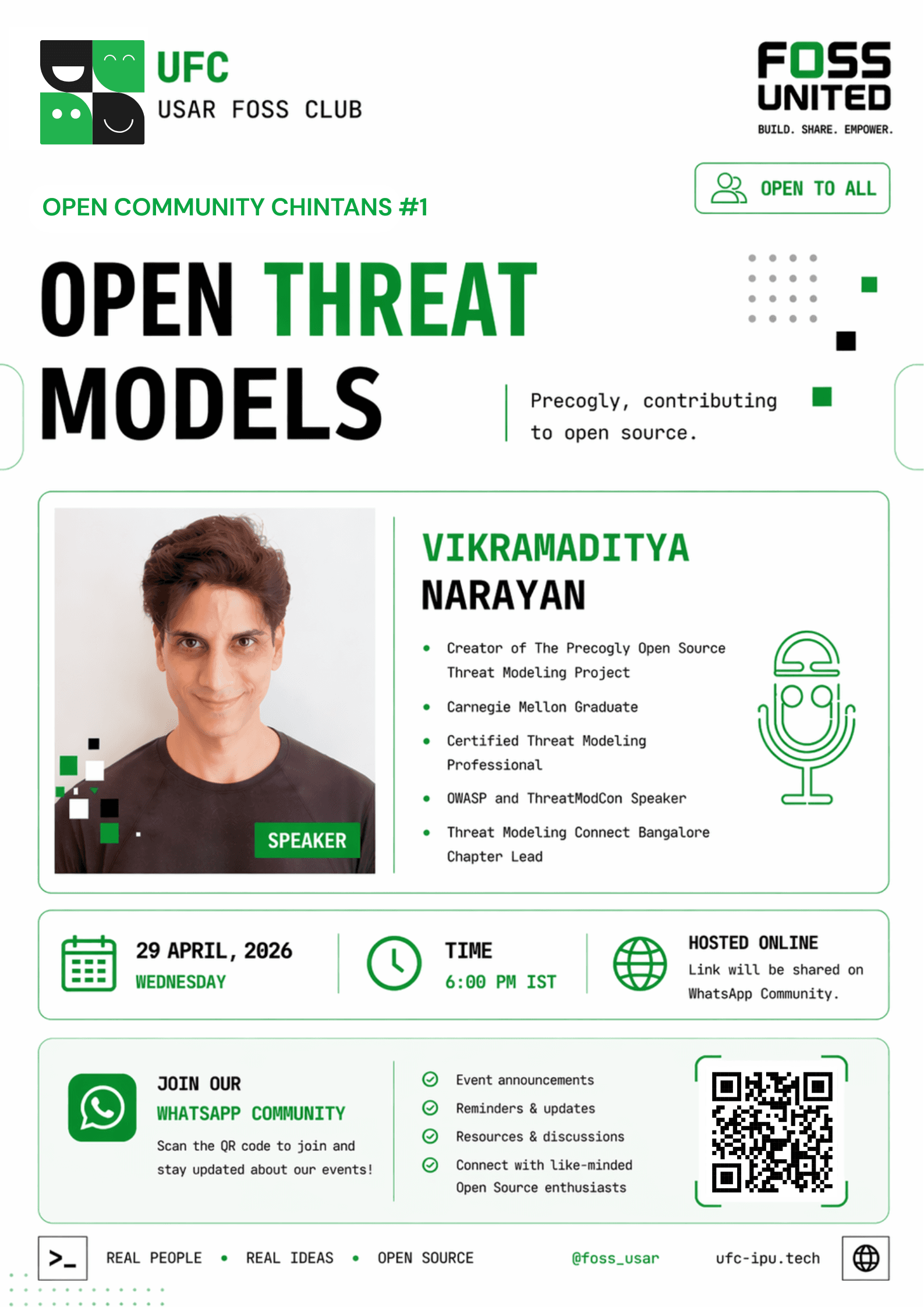
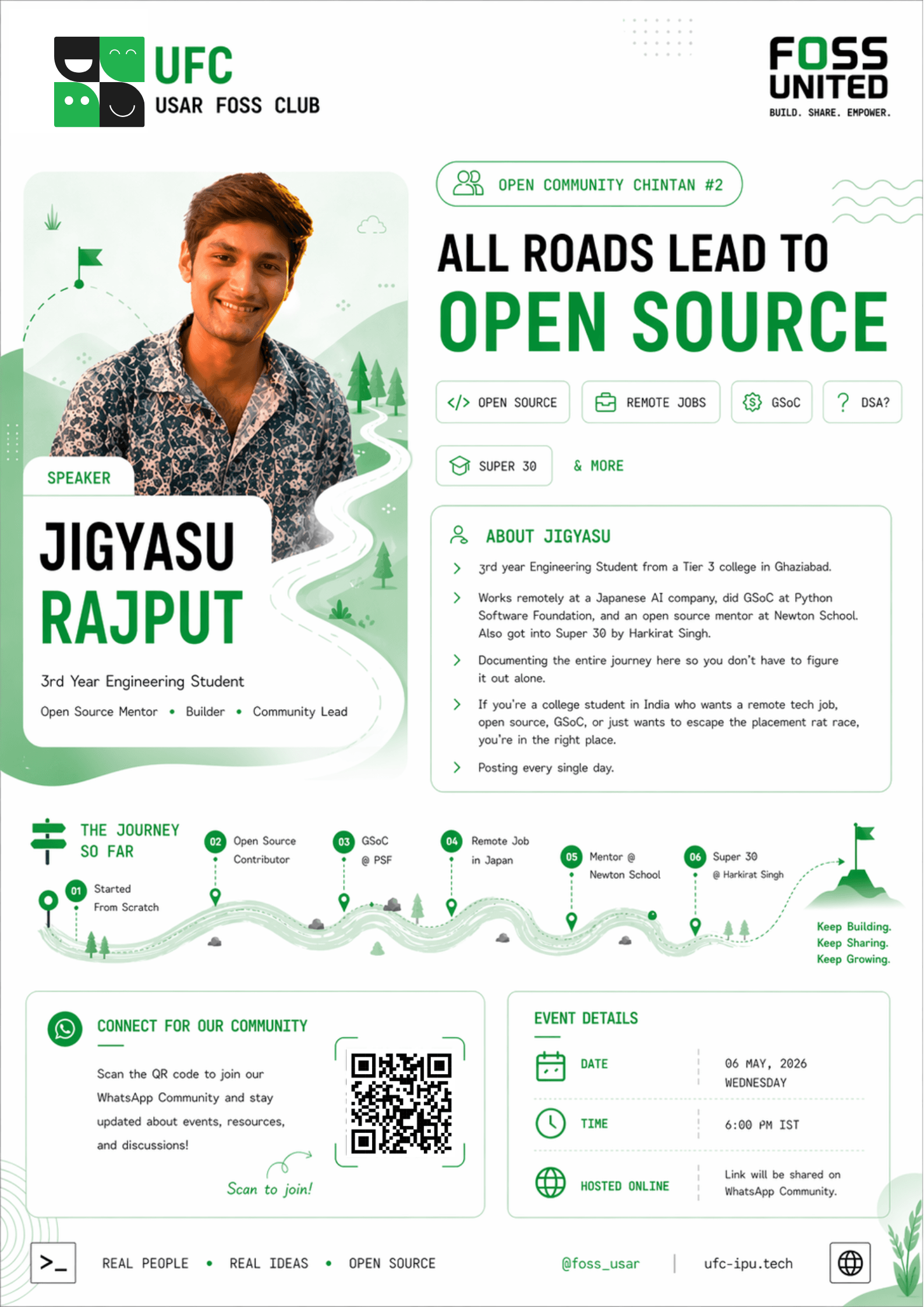
We kicked things off with an orientation, then ran Git Gud so a room full of people could make their first git commit. After that came a session on AI coding with a mini hackathon, and two online talks, one on threat modelling and one on getting into GSoC. Anyone could join.

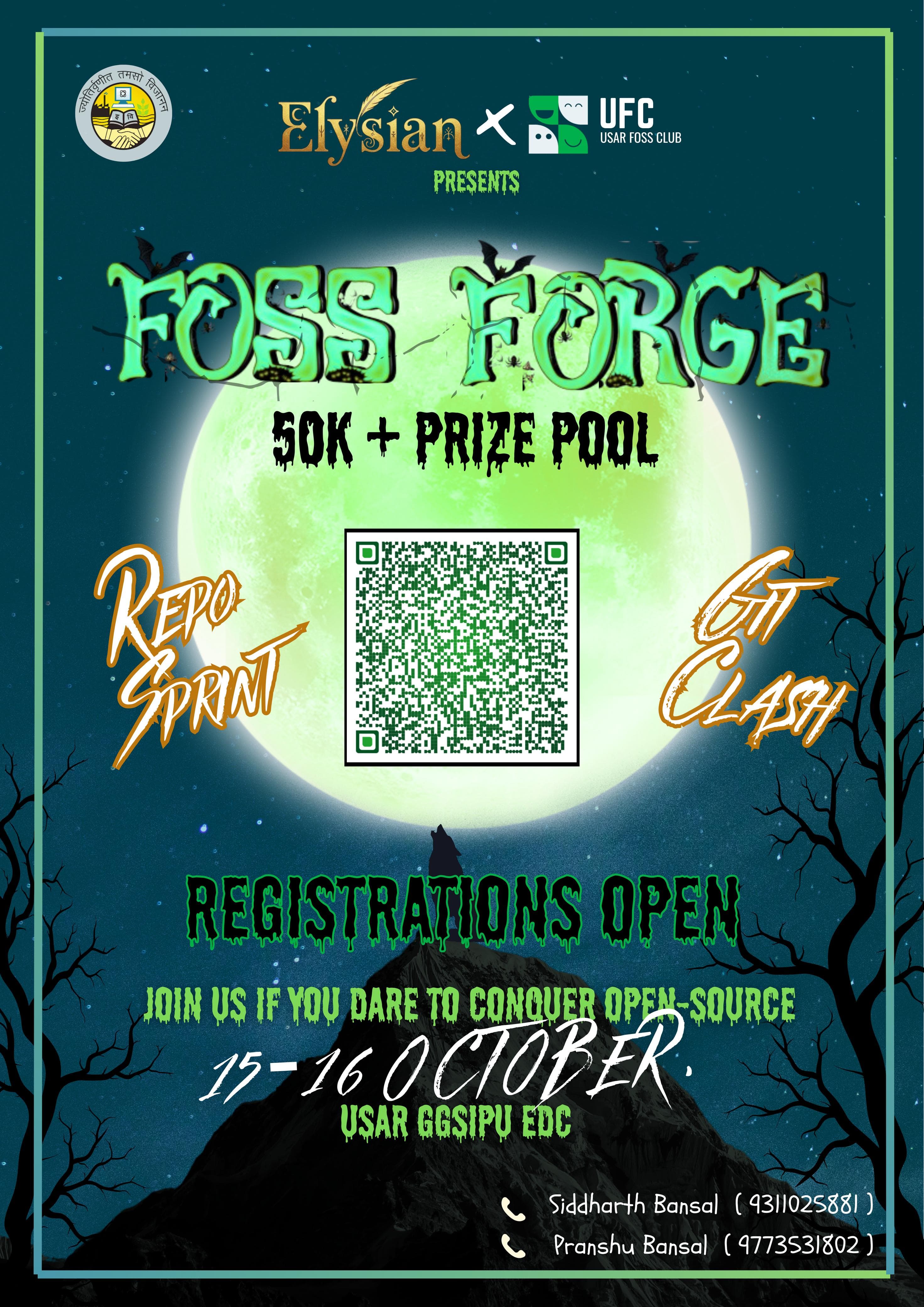
Then FOSS Forge happened: two days of Git Clash, a Pokémon YAML showdown and a repo sprint, as part of ELYSIAN. In between there were trips, parties, a group chat that never slept and plenty of late nights that turned classmates into friends. We started the year as a few people with an idea and finished it as a community.

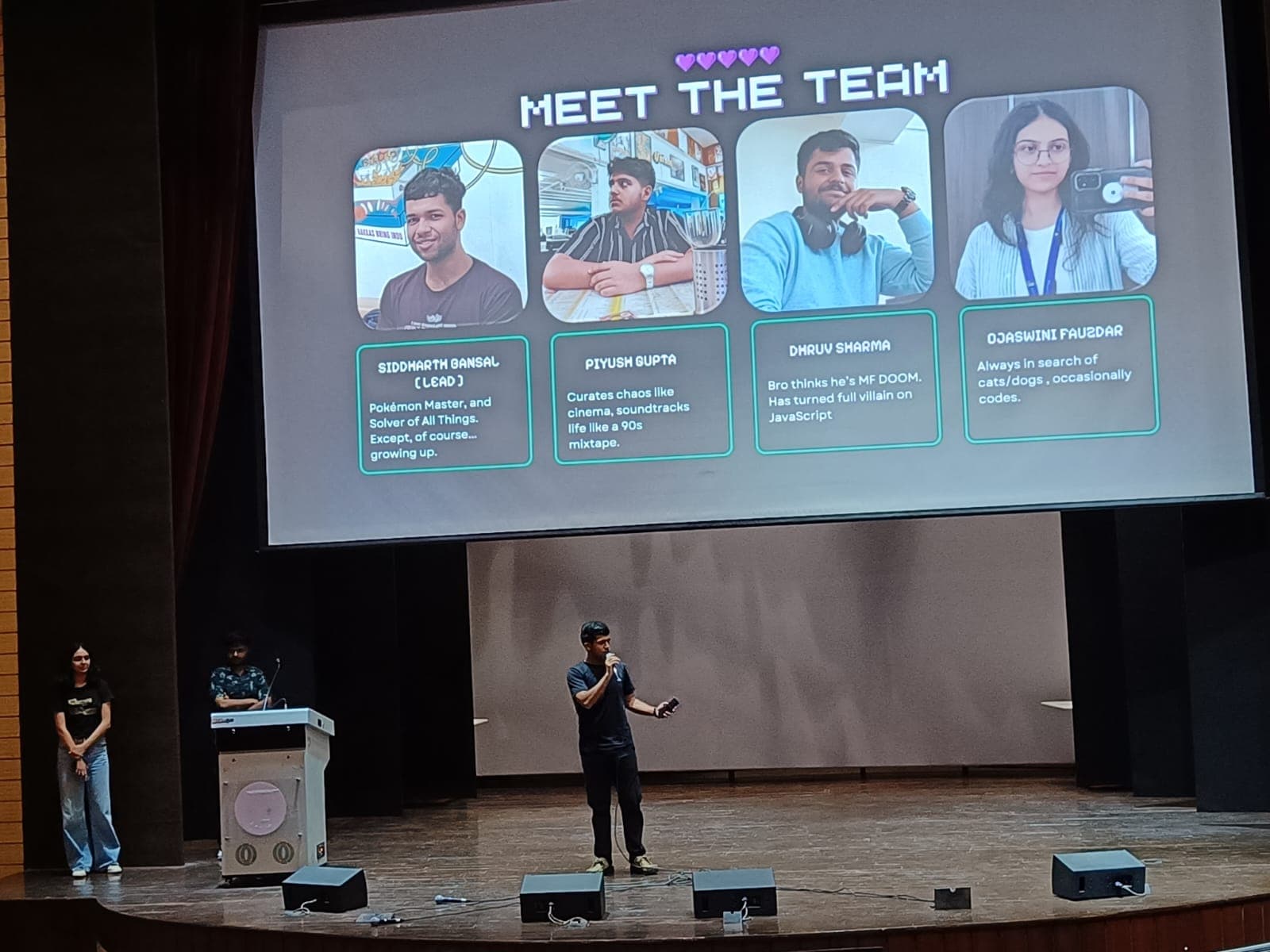
UFC members introducing the club on stage at the orientation
day zero: a stage, a projector and a room of curious people.
Git Gud poster: Git and GitHub intro, October 10
git gud: commits, branches and a first PR.
FOSS Forge 2025 poster
FOSS Forge '25: two days, a lot of pull requests.
Open Community Chintan #01 poster
open talk #01: threat models.
Open Community Chintan #02 poster
open talk #02: all roads lead to open source.
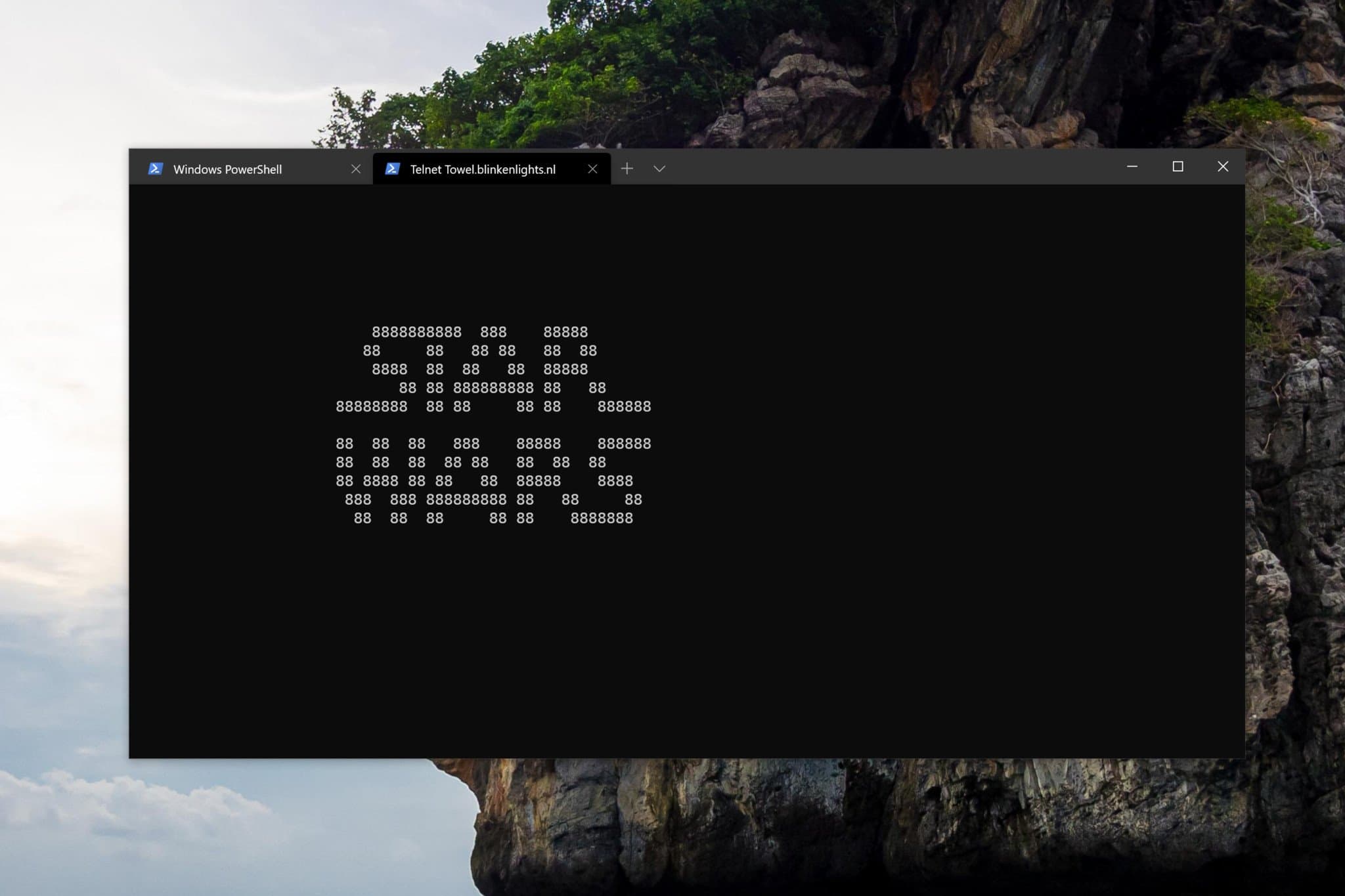
A terminal window running on a laptop
the terminal, our natural habitat.
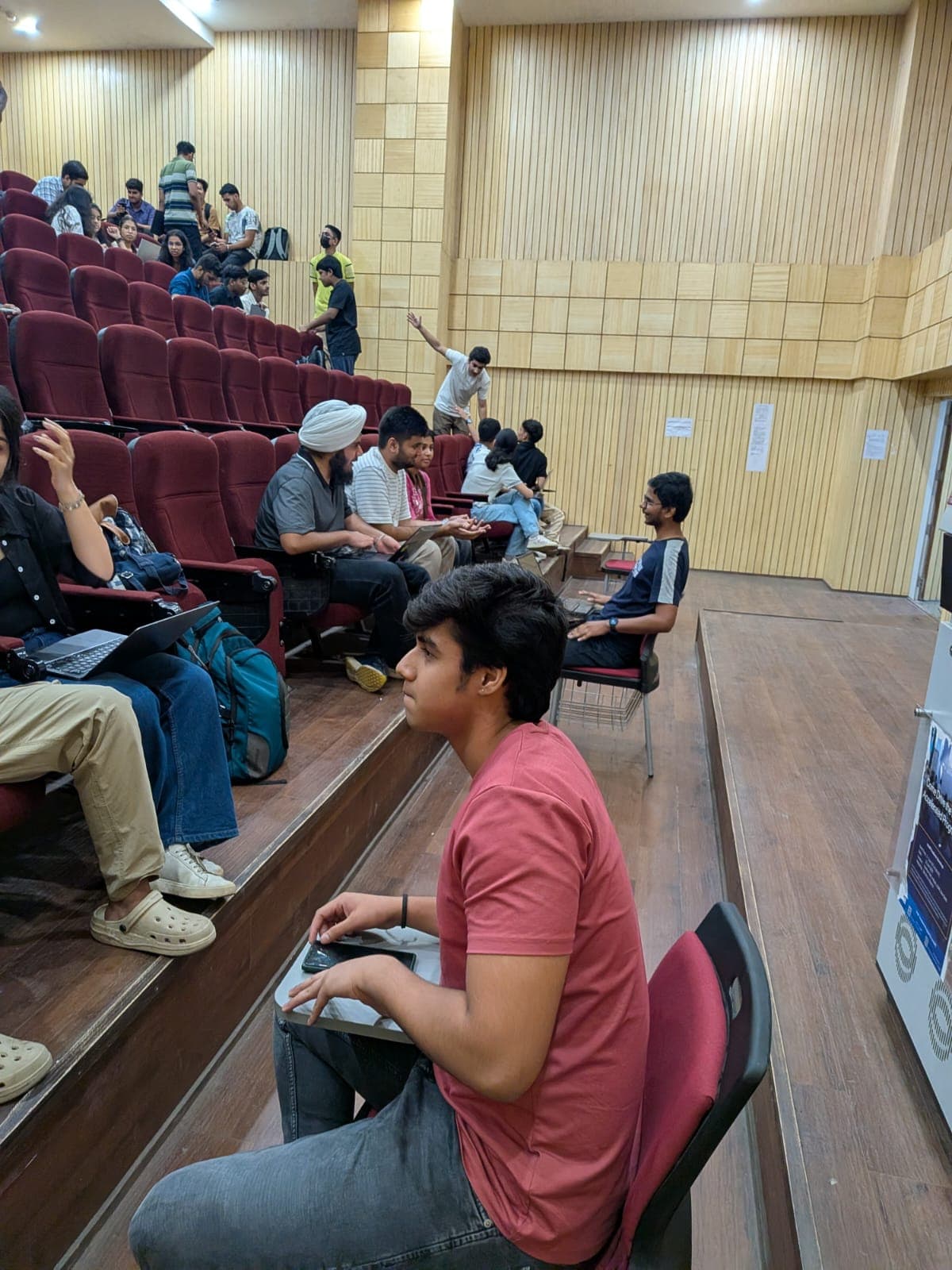
Students collaborating around laptops
builders collaborating.
Git Gud: from first commit to first PR, live.
Two open talks, online, free for everyone.
FOSS Forge: two days of open source competition.
Trips, parties and a group chat that never sleeps.
See all our events
the full timeline lives there

§ 03 · what's next

Year two isyours to shape.

Nobody guards the door and there's no entry exam. Come as you are. Whatever you build, design, write or organise, there's a place for it here.